The Budget and Finance Committee of Parliament has warned that the budgets’ overemphasis on social protection risks creating a social welfare State where more resources go towards safety nets without real impact.
The committee expressed this after a joint budget analysis with the Public Accounts Committee of Parliament, Malawi Economic Justice Network (Mejn) and the Norwegian Church Aid that was meant to enlighten committee members on the 2026/27 budget outlook.
Among key highlights, the K10.9 trillion budget has increased social cash transfer programme by 58.6 percent to K7 billion, allocated K60 billion to maize purchase, K111.46 billion to the Farm Input Subsidy Programme (Fisp) and K1.03 trillion to the health sector, among others.
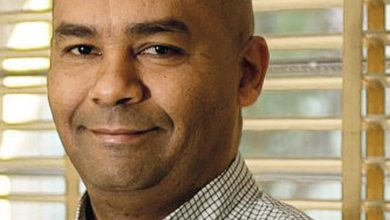
In his address, budget and finance committee chairperson Sosten Gwengwe,
while highlighting that social protection programmes are critical to the vulnerable, said there is need for government to review such programmes for progress.
For instance, Gwengwe said it is concerning that the same people are benefiting from numerous social protection

programmes without graduating which means the programmes are not designed appropriately.
Gwengwe said: “We need to look at how best to allocate resources, who should be targeted, for what, because if we don’t really get it right we will be getting everyone under the social safety nets from government and
there is a danger of creating a social welfare State. That’s what we should avoid as a nation.
“Yes, there will always be the vulnerable and [only] the vulnerable should be given the safety nets but we need to look at strategies on how we can help people to become more productive and graduate from these safety nets because we cannot sustain them when poverty keeps increasing. There shall come a time when there will be no resources.”
Gwengwe’s remarks also come at a time poverty levels have remained elevated despite the country has been implementing a number of social protection and safety nets programmes with about 70 percent of Malawians remaining poor.
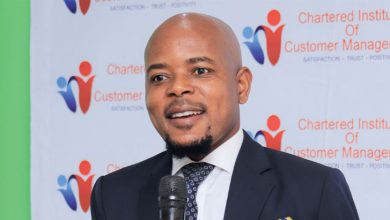
In an interview, Mejn executive director Bertha Phiri said the joint budget analysis with the two committees was critical to ensure that members of Parliament ably scrutinise the budget during deliberations while performing their oversight mandate.
When asked if the budget is in line with Mejn’s inputs that it presented during pre-budget consultations, Phiri said some have been incorporated while others have not been taken onboard stressing how critical the analysis is to equip parliamentarians on budget scrutiny.
She said: “In as far as we don’t see all our inputs considered, but remember at formulation stage there were budget consultations and we made some submissions.
“Just to mention a few, some structural or strategic reforms even around the implementation of Fisp have been our recommendations but we realise that advocacy is a process, not everything can be considered.
“Even the increment in development budget has been our message to say that at regional level, we must be at 35 percent, so considerations are there. We are not there yet but these integration and engagements are very helpful for parliamentarians to engage with the budget.”
In his remarks, Paul Mmanjamwada, head of programmes for Norwegian Church Aid which funded the project described the engagement as key to empower members of Parliament identify critical areas of the budget and recommend where resources are needed the most.
“The analysis is important to budget and finance committee and public accounts committee. It helps them to take key issues that support them in scrutinising the budget,” Mmanjamwada said.
Presenting the budget in Parliament on February 27, 2026, Minister of Finance Economic Planning and Decentralisation Joseph Mwanamvekha described the fiscal plan as production and development-oriented covering 30.9 percent or K3.397 trillion of the blue print.
The budget meeting which president Peter Mutharika opened with a State-of-the- Nation Address on February 13 will run up to April 10 2026